Reform Club
Around the World in Eighty DaysThe Reform Club is the central London setting of Phileas Fogg’s private routine and public wager: he spends his days there with almost clocklike regularity, stakes twenty thousand pounds there on an eighty-day journey, and finally returns to its saloon to claim victory. More than a backdrop, the club makes his habits visible and gives the novel’s test of punctuality a fixed point of departure and arrival.
Setting and Membership
Fogg belongs to no other society or institution known to those around him; the Reform Club is his one confirmed affiliation. His admission came through a recommendation from Barings Bank, where he had an open line of credit. That narrow social identity suits a man whose private life is otherwise difficult to locate: he lives alone in Saville Row, has no known close family or friends, and is not seen elsewhere in London society.
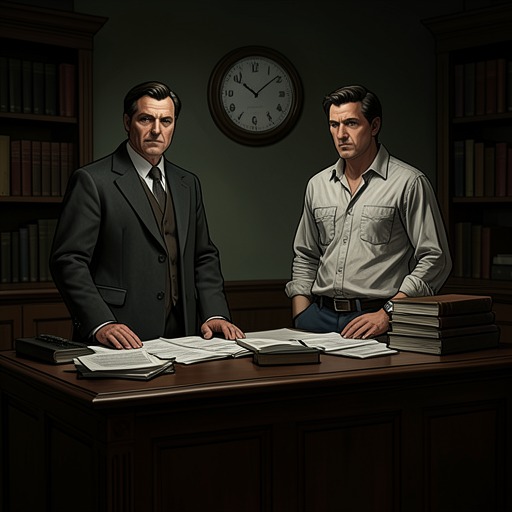
The club occupies an imposing building in Pall Mall, described as having cost at least three million pounds. Its grand rooms and carefully ordered facilities provide Fogg with a settled world: a dining room with nine windows overlooking a garden, a large hall hung with framed paintings, a reading room, and private chambers available to favored members. He does not use those chambers. The club’s scale and luxury surround a member whose own conduct is defined less by display than by repetition.
Fogg’s Daily Routine
Fogg’s days at the club proceed according to fixed hours. He takes breakfast and dinner in the same room, at the same table, and does not join other members for meals or bring guests. He arrives home in Saville Row at midnight, and spends ten of the day’s twenty-four hours there sleeping or dressing. Even his walks at home are described as measured circuits through the entrance hall or the gallery beneath its dome and twenty red porphyry columns. Against that private regularity, the club is the public place where his timetable can be observed.
On the day the wager begins, Fogg shuts his house door at half-past eleven and reaches the club after counting 575 steps with his right foot and 576 with his left. He sits down to a breakfast of broiled fish with Reading sauce, roast beef with mushrooms, tart, Cheshire cheese, and several cups of tea. He rises at thirteen minutes to one, reads the Times until a quarter before four, and then turns to the Standard before dinner. After dinner, he reads the Pall Mall. These particular hours and actions give material form to the precision that will soon be tested against the uncertain duration of a journey around the world.
The club is also where Fogg’s preferred recreation takes place. He plays whist with regular partners, among them Andrew Stuart, John Sullivan, Samuel Fallentin, Thomas Flanagan, and Gauthier Ralph, a director of the Bank of England. Fogg often wins, but sets aside his winnings for charity rather than adding them to his purse. For him, whist is a contest with a difficulty, a motionless struggle suited to his temperament. The game’s calm, enclosed competition anticipates the far larger contest he accepts in the same rooms.
The Wager and Departure
The challenge grows out of a discussion among the club’s whist players about the recent robbery at the Bank of England and the speed of modern travel. Fogg argues that a traveler can now circle the globe in eighty days. He turns the claim into a precise test: he offers twenty thousand pounds against anyone who wishes to accept, specifying nineteen hundred and twenty hours, or 115,200 minutes. Stuart, Fallentin, Sullivan, Flanagan, and Ralph accept after consulting one another.
Fogg fixes the terms by consulting a pocket almanac. He says he is due back in the same Reform Club room on Saturday, 21 December, at a quarter before nine in the evening. A memorandum is drawn up and signed by all six participants; he gives a cheque for the stake, which is already deposited in his name at Barings Bank. The twenty thousand pounds represents half his fortune. He stakes it because he anticipates that he may need to spend the other half carrying out what even his opponents regard as an exceptionally difficult undertaking. He remains composed while they are visibly agitated, troubled not only by the money but by the severity of the terms for their friend.
The departure is immediate rather than ceremonial. Fogg tells the group that the train for Dover leaves at a quarter before nine and that he will take it that evening. The club, which has contained his ordinary daily schedule, becomes the starting line for a journey whose success will be measured by his return to that exact room at that exact hour.
Absence, Expectation, and Return
During the journey, the club remains a point of reference even when Fogg is far away. His companions on the Mongolia include fellow whist players, and he continues to play the game at sea, maintaining a familiar practice amid the ship’s rolling and the changing scenery of the Red Sea. Later, in the American train, Passepartout worries that Fogg might encounter Colonel Stamp Proctor, since a fight could delay him and benefit the Reform Club’s five wager-holders. The club’s interest in the outcome follows Fogg across the route: every delay is measured against the promise made there.
On Sunday, after the stipulated Saturday evening has passed without Fogg’s appearance, his house in Saville Row seems uninhabited. For the first time in his residence there, he does not leave for the club at half-past eleven. His opponents have the cheque and appear entitled to claim the stake; Fogg stays home and puts his affairs in order. Passepartout repeatedly goes up and down the stairs, listening at his master’s door, while the club that had anchored Fogg’s daily life becomes the absent destination against which apparent defeat is measured.
Meanwhile, the expectation of his return gathers in the streets around Pall Mall. On Saturday evening a great crowd fills the nearby streets, obstructing movement as arguments, discussions, and financial dealings swirl around the wager. Police struggle to hold people back. Inside, the five opponents wait anxiously in the club’s great saloon. As the appointed hour approaches, the crowd and the clock together turn the private bet into a public spectacle.
Fogg reaches the saloon at a quarter before nine, escorted by the excited crowd that has pressed through the doors. In a calm voice he announces, "Here I am, gentlemen!" The clock has not yet completed its final minute when he appears; the narrative confirms that he has completed the journey in eighty days and won the twenty-thousand-pound wager. The return reverses the club’s temporary judgment that he has failed. The same place that fixed his departure time, held his opponents’ expectations, and seemed to close around his absence becomes the scene of his vindication.
Narrative Significance
The Reform Club gives the journey its framework of measurable time. Fogg’s hours there are fixed by meals, newspapers, card games, and punctual returns home; the wager then carries that same precision outward, converting a claim about travel into a deadline with a sum of money attached. Its rooms also connect private character to public judgment: the composure with which Fogg stakes half his fortune contrasts with the agitation of the other players and, later, the crowd outside.
The club’s importance lies in this double role. It is at once Fogg’s habitual refuge and the place where his routine is interrupted by the wager; it is the departure point and the tribunal of return. While he is absent, the members and the surrounding crowd turn his promised arrival into a spectacle. When he enters just before the decisive minute, the club’s measured interior and the commotion at its doors meet in one final scene, and the wager is settled where it began.